STP Plant Manufacturers in Vijayawada: Advanced Water Treatment Solutions
Vijayawada, a bustling metropolis on the banks of the Krishna River, is experiencing rapid urbanization and industrial growth. While this progress brings prosperity, it also presents significant environmental challenges, particularly concerning water pollution. The efficient treatment of sewage and wastewater is no longer an option but a critical necessity for maintaining public health, preserving aquatic ecosystems, and ensuring sustainable development. This is where the role of expert Water Treatment Plant manufacturers in Vijayawada becomes indispensable.
Finding a reliable STP plant manufacturer that understands the local landscape and regulatory requirements is crucial. This comprehensive guide will delve into the world of sewage treatment plants (STPs), highlighting why choosing the right manufacturer is paramount for Vijayawada’s environmental future.
The Growing Demand for Sewage Treatment Plants in Vijayawada
As Vijayawada expands, so does its population and the volume of wastewater generated. Untreated sewage poses severe risks, including the contamination of groundwater and surface water sources, the spread of waterborne diseases, and damage to biodiversity. Recognizing these threats, local authorities and industries are increasingly mandated to implement robust sewage treatment solutions.
- Urbanization Impact: Rapid population growth leads to increased domestic wastewater discharge.
- Industrial Effluents: Industries contribute significantly to wastewater, requiring specialized treatment before discharge.
- Environmental Regulations: Stricter norms from bodies like the Central Pollution Control Board (CPCB) and State Pollution Control Boards (SPCBs) necessitate compliance.
- Public Health: Preventing waterborne diseases and ensuring a healthy living environment for citizens.
This escalating demand has spurred the growth of expert STP Plant manufacturers in India, with a strong focus on regional hubs like Vijayawada. These manufacturers are at the forefront, developing and deploying advanced technologies to tackle complex wastewater challenges.
Understanding a Sewage Treatment Plant (STP)
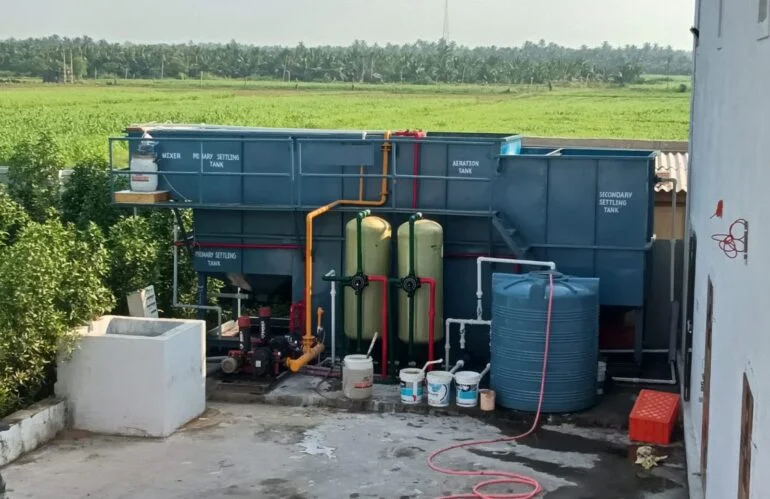
A Sewage Treatment Plant (STP) is a facility designed to remove contaminants from wastewater and household sewage, producing an effluent that is suitable for discharge to the natural environment or for reuse. The process typically involves several stages:
Preliminary Treatment
This initial stage involves the physical removal of large solids. Screens remove debris like rags, plastics, and grit chambers settle out sand and gravel. This protects downstream equipment from damage and blockages.
Primary Treatment
In this stage, wastewater flows into large tanks, where heavier organic solids settle to the bottom (primary sludge), and lighter materials like grease and oil float to the surface (scum). Both are then removed.
Secondary Treatment (Biological Treatment)
This is the core of the treatment process, utilizing biological processes to break down dissolved and suspended organic matter. Microorganisms consume organic pollutants. Common methods include:
- Activated Sludge Process (ASP): Involves aerating sewage with a biological floc.
- Moving Bed Biofilm Reactor (MBBR): Uses plastic carriers to provide a surface for biofilm growth.
- Sequential Batch Reactor (SBR): A fill-and-draw activated sludge system.
- Membrane Bioreactor (MBR): Combines activated sludge with a membrane filtration process.
The choice of technology often depends on the wastewater characteristics, required effluent quality, available space, and operational costs. A reputable STP plant manufacturer in Vijayawada will guide you through selecting the most appropriate technology.
Tertiary Treatment (Advanced Treatment)
This optional but increasingly vital stage aims to further improve effluent quality. It can involve filtration (sand filters, activated carbon), disinfection (chlorination, UV radiation, ozonation), and nutrient removal (nitrogen and phosphorus). Tertiary treatment makes the water suitable for various reuse applications, reducing dependency on fresh water sources.
What to Look for in an STP Plant Manufacturer in Vijayawada
Choosing the right STP plant manufacturer is a critical decision that impacts the longevity, efficiency, and compliance of your sewage treatment system. Here are key factors to consider:
Expertise and Experience
Look for manufacturers with a proven track record in designing, installing, and commissioning a diverse range of STP projects. Experience in handling varying wastewater compositions and scales is invaluable.
Technological Prowess and Innovation
The field of wastewater treatment is constantly evolving. A leading STP plant manufacturer in India should employ advanced technologies and be capable of integrating innovative solutions like MBR or SBR systems for superior effluent quality and reduced footprint.
Customization and Scalability
Every project has unique requirements. A good manufacturer offers tailored solutions, not just off-the-shelf products. The ability to design scalable systems that can accommodate future expansion is also a significant advantage.
Compliance with Regulatory Standards
Ensure the manufacturer adheres strictly to all national and local environmental regulations (CPCB, SPCB norms). Their systems should consistently meet or exceed stipulated discharge standards.
After-Sales Service and Support
Installation is just the beginning. Comprehensive after-sales service, including operation and maintenance (O&M) contracts, spare parts availability, and technical support, is crucial for trouble-free operation.
Cost-Effectiveness and Energy Efficiency
While initial investment is a factor, consider the long-term operational costs, including energy consumption and chemical usage. An energy-efficient design can lead to significant savings over the lifespan of the plant.
Project Management and Timely Delivery
Evaluate their project management capabilities, commitment to deadlines, and adherence to budgets. Delays can be costly, so a reliable project execution team is vital.
Top 10 STP Manufacturers in India & Their Presence in Vijayawada
While naming an exact “Top 10” can be subjective and vary by project scope, several prominent STP plant manufacturers have a strong presence or serve clients across India, including Vijayawada. These companies are known for their quality, innovation, and extensive project portfolios:
- Wastewater treatment specialists with decades of experience.
- Firms offering comprehensive turnkey solutions from design to O&M.
- Manufacturers known for their advanced MBR and SBR technologies.
- Companies with strong R&D focus on sustainable water solutions.
- Providers of modular and compact STP solutions suitable for diverse applications.
When searching for “STP plant Manufacturers near me” in Vijayawada, it’s advisable to connect with these national players who often have regional offices, strong dealer networks, or execution teams in major cities like Vijayawada. They bring national expertise with local service capabilities.
The Benefits of Investing in a Modern Sewage Treatment Plant
Installing an advanced STP offers a multitude of benefits, extending beyond mere regulatory compliance:
- Environmental Protection: Prevents pollution of rivers, lakes, and groundwater, preserving natural ecosystems.
- Public Health Safeguard: Reduces the risk of waterborne diseases, creating a healthier community.
- Water Reuse Potential: Treated effluent can be safely used for non-potable purposes such as irrigation, industrial cooling, toilet flushing, and gardening, thereby conserving fresh water resources. This is particularly vital in water-stressed regions.
- Regulatory Compliance: Avoids hefty fines and legal penalties associated with non-compliance.
- Resource Recovery: Modern STPs can sometimes recover valuable resources like biogas (from anaerobic digestion) or nutrients.
- Enhanced Public Image: For industries and commercial establishments, demonstrating environmental responsibility can boost reputation.
Challenges in STP Implementation and How Manufacturers Provide Solutions
Implementing an STP project can come with challenges such as limited space, high operational costs, and the need for consistent maintenance. Leading Water Treatment Plant manufacturers in Vijayawada address these by:
- Compact Designs: Offering modular and packaged STPs that require minimal land footprint, ideal for urban settings.
- Energy-Efficient Technologies: Incorporating advanced aeration systems, efficient pumps, and automation to reduce power consumption.
- Automated Operations: Implementing SCADA systems for remote monitoring and control, reducing manual intervention and optimizing performance.
- Robust O&M Services: Providing comprehensive maintenance packages and training for facility staff to ensure optimal plant performance and longevity.
Finding Your Ideal STP Partner in Vijayawada
To identify the best STP plant manufacturer in Vijayawada for your specific needs, begin by:
- Defining your wastewater characteristics and required effluent quality.
- Estimating the capacity needed (e.g., KLD – Kilo Liters per Day).
- Researching local and national manufacturers with a strong portfolio.
- Requesting detailed proposals and conducting site visits to operational plants if possible.
- Evaluating not just the cost, but also technology, service, and long-term support.
Engaging with a seasoned sewage treatment plant expert early in your project planning can save significant time and resources.
Conclusion: Paving the Way for a Cleaner Vijayawada
The journey towards a cleaner and healthier Vijayawada relies heavily on effective wastewater management. Investing in a high-quality sewage treatment plant from a reputable manufacturer is an investment in the city’s future. By choosing experienced Water Treatment Plant manufacturers in Vijayawada, you ensure not only compliance but also contribute to environmental sustainability and public well-being.
Take the proactive step today towards responsible wastewater management. Connect with leading STP Plant manufacturers who can provide tailored, efficient, and sustainable solutions for your residential, commercial, or industrial needs.
FAQs about Water Treatment Plants in Vijayawada
-
1. What is the primary purpose of a Sewage Treatment Plant (STP)?
-
The primary purpose of an STP is to remove contaminants from wastewater and sewage, converting it into an effluent that can be safely discharged into the environment or reused for non-potable applications like irrigation or industrial processes. This protects public health and aquatic ecosystems.
-
2. How do I choose the right STP plant manufacturer in Vijayawada?
-
Consider factors such as the manufacturer’s experience, technological capabilities (e.g., SBR, MBBR, MBR), ability to provide customized solutions, adherence to CPCB norms, after-sales service, and overall cost-effectiveness. It’s advisable to review their project portfolio and client testimonials.
-
3. Are there different types of STP plants, and which one is best for me?
-
Yes, common types include Activated Sludge Process (ASP), Moving Bed Biofilm Reactor (MBBR), Sequential Batch Reactor (SBR), and Membrane Bioreactor (MBR). The “best” type depends on factors like the volume and characteristics of your wastewater, space availability, desired effluent quality, and budget. An expert manufacturer can recommend the optimal solution.
-
4. Can treated sewage water be reused?
-
Absolutely. With adequate tertiary treatment, treated sewage water (reclaimed water) can be safely reused for various non-potable purposes such as landscaping, agricultural irrigation, industrial cooling, toilet flushing, and groundwater recharge. This significantly reduces the demand for fresh water.
-
5. What is the typical lifespan and maintenance requirement for an STP?
-
The typical lifespan of a well-maintained STP can range from 15 to 25 years or more, depending on the components and technology used. Maintenance typically involves regular monitoring, sludge removal, equipment checks, and occasional replacement of parts. Reputable manufacturers offer comprehensive Annual Maintenance Contracts (AMCs) to ensure optimal performance and longevity.