
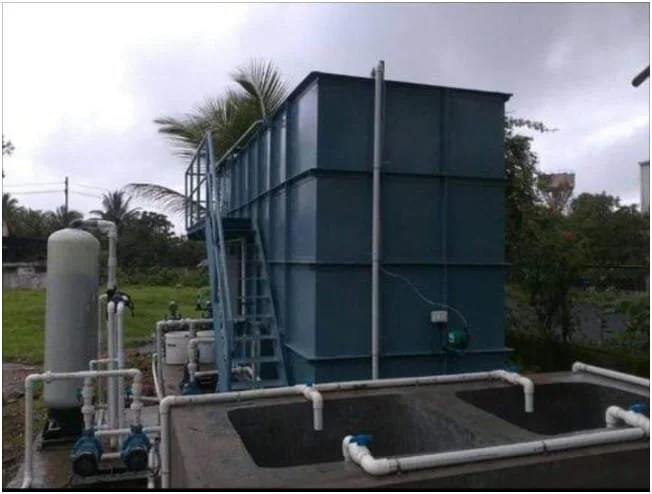
Sewage Treatment Plant (STP) Solutions
Water is one of the most vital resources on Earth, and maintaining its quality is essential for public health, environmental sustainability, and overall quality of life. With rapid urbanization, industrialization, and population growth, the generation of domestic and municipal wastewater has increased significantly. Untreated sewage can contaminate natural water bodies, spread diseases, and disrupt aquatic ecosystems. Managing this wastewater efficiently is therefore a critical necessity for every community. Sewage Treatment Plants (STPs) are designed to address this challenge by treating domestic and municipal wastewater, ensuring safe discharge or reuse.
At Amrita Water Solutions, we provide advanced STP solutions that combine robust design, innovative technology, and sustainable practices. Our STPs are engineered to handle varying volumes of wastewater, ensuring compliance with regulatory standards and promoting water reuse in urban and residential settings.
Understanding Sewage Wastewater
Sewage is primarily generated from households, residential complexes, hotels, schools, and commercial establishments. It typically contains:
- Organic Matter: From human waste, food residues, and detergents.
- Suspended Solids: Particles that can settle or remain in water, affecting clarity.
- Pathogens: Bacteria, viruses, and other microorganisms harmful to human health.
- Nutrients: Nitrogen and phosphorus, which can cause eutrophication if discharged untreated.
- Chemicals: Cleaning agents, soaps, and minor household chemicals.
Unlike industrial wastewater, which often contains hazardous chemicals, sewage wastewater is primarily organic and microbiological in nature. Therefore, treatment methods focus on removing solids, reducing biochemical oxygen demand (BOD), and eliminating pathogens.
Key Components of an STP
A modern STP is composed of multiple stages, each designed to treat sewage efficiently and produce clean water suitable for discharge or reuse. The main components are:
- Preliminary Treatment:
The first stage involves removing large solids, debris, plastics, rags, and grit from sewage. Screens, grit chambers, and sedimentation tanks are used to prevent clogging and damage to downstream equipment. - Primary Treatment:
This stage allows suspended solids and organic matter to settle in primary sedimentation tanks. Heavy particles settle at the bottom as sludge, while lighter materials like oil and grease float to the surface and are removed. Primary treatment significantly reduces BOD and COD, preparing sewage for biological treatment. - Secondary (Biological) Treatment:
Secondary treatment is the heart of any STP, where microorganisms degrade biodegradable organic matter. There are various biological processes, including:- Activated Sludge Process (ASP): Aerobic bacteria break down organic pollutants in aeration tanks.
- Trickling Filters/Biofilters: Wastewater passes through media colonized by microbial biofilms.
- Sequencing Batch Reactors (SBR): Aerobic and anaerobic processes occur in cycles to treat sewage efficiently.
- Tertiary Treatment (Advanced Treatment):
In some STPs, tertiary treatment is employed to further polish the treated water, making it suitable for reuse. Processes include:- Filtration: Sand or membrane filters remove fine particles.
- Disinfection: Chlorination, UV treatment, or ozone eliminates pathogens.
- Nutrient Removal: Techniques to reduce nitrogen and phosphorus levels.
- Sludge Treatment and Disposal:
Treatment processes generate sludge, which contains concentrated organic matter and microbial biomass. Sludge is thickened, dewatered, and stabilized before safe disposal or use as fertilizer. Proper sludge management is essential to maintain environmental safety and comply with regulations.
Benefits of Sewage Treatment Plants
Implementing an STP provides numerous advantages for residential communities, municipalities, and commercial establishments:
- Public Health Protection: Reduces the risk of waterborne diseases by removing pathogens.
- Environmental Conservation: Prevents pollution of rivers, lakes, and groundwater.
- Water Reuse: Treated water can be used for landscaping, flushing, cooling, or irrigation, reducing dependence on freshwater sources.
- Odor Control: Modern STPs employ methods to minimize foul odors associated with sewage treatment.
- Regulatory Compliance: Ensures wastewater discharge meets local, state, and national standards.
- Sustainability: Demonstrates commitment to responsible water management and resource conservation.
Applications of STPs
STPs are widely used in urban and residential areas to manage domestic wastewater:
- Residential Complexes and Housing Societies: Treat sewage generated from apartments and gated communities.
- Hotels and Resorts: Manage wastewater from guest rooms, kitchens, and laundries.
- Commercial Complexes and Offices: Treat effluent from cafeterias, restrooms, and maintenance areas.
- Municipalities and Townships: Provide large-scale treatment for cities and towns to ensure environmental protection.
- Hospitals and Educational Institutions: Manage wastewater from patient care, laboratories, and cafeterias.
Customization and Technological Advancements
Every STP must be designed according to the population it serves, the volume of wastewater generated, and the desired effluent quality. At Amrita Water Solutions, we provide customized STP designs based on:
- Wastewater Characteristics: BOD, COD, pH, TSS, and nutrient content.
- Flow Rate: Peak and average daily wastewater generation.
- Space Availability: Compact designs for urban areas or larger setups for township projects.
We integrate advanced technologies for optimal performance:
- Automated Control Systems: Real-time monitoring, process optimization, and remote operation.
- Membrane Bioreactors (MBR): High-quality effluent with reduced footprint.
- UV/Chlorine Disinfection: Ensures elimination of harmful pathogens.
- Energy-Efficient Aeration Systems: Reduces operational costs while maintaining treatment efficiency.
Sustainability and Environmental Responsibility
Water scarcity and pollution are pressing global challenges. By implementing STPs, communities and industries contribute to water conservation and environmental protection. Treated water can be reused for non-potable applications, reducing the strain on freshwater resources. Additionally, properly treated effluent minimizes contamination of natural water bodies, protecting aquatic ecosystems and biodiversity.
Why Choose Amrita Water Solutions
- Expertise: Over 15 years of experience in water and wastewater treatment solutions.
- Customized Design: Tailored STPs for residential, commercial, and municipal applications.
- Compliance: Systems designed to meet local and national environmental regulations.
- Reliable Performance: High-quality components and proven technologies for consistent operation.
- Support Services: Comprehensive after-sales support, preventive maintenance, and technical guidance.
Conclusion
Sewage Treatment Plants (STPs) are essential for ensuring safe, efficient, and sustainable management of domestic and municipal wastewater. They protect public health, preserve the environment, enable water reuse, and promote responsible water management.
At Amrita Water Solutions, we offer advanced STP solutions that combine robust design, modern technology, and sustainability-focused practices. By choosing our STPs, residential communities, commercial establishments, and municipalities can ensure reliable wastewater treatment, regulatory compliance, and contribution to a cleaner, healthier environment.
Investing in a high-quality STP not only addresses immediate wastewater challenges but also prepares communities for a sustainable water future. With our expertise, dedication, and innovative solutions, Amrita Water Solutions is a trusted partner in building sustainable water management systems that benefit people, industries, and the planet.