SEO Description: Looking for top Water Treatment Plant manufacturers in Dhanbad? Discover leading STP plant manufacturers in India offering advanced sewage treatment solutions for a cleaner future.
Dhanbad, often hailed as the “Coal Capital of India,” is a city pulsating with industrial vigor and an ever-expanding urban landscape. This rapid development, while fueling economic growth, simultaneously escalates the demand for sustainable infrastructure, especially concerning water and wastewater management. The burgeoning population and proliferation of industries generate substantial amounts of sewage, making the establishment of efficient Sewage Water Treatment Plants (STPs) not just an environmental necessity but a cornerstone of public health and ecological balance. This detailed guide aims to illuminate the critical role of STP plants in Dhanbad and provide insights into selecting the most proficient “Water Treatment Plant manufacturers in Dhanbad” to secure a sustainable future.
The Unavoidable Need for Sewage Treatment in Dhanbad’s Evolving Landscape
Dhanbad’s unique position as a major industrial hub, particularly for mining and allied industries, coupled with its growing residential areas, presents distinct wastewater management challenges. The untreated discharge from these sectors can severely contaminate the local rivers, groundwater, and soil, leading to a cascade of adverse effects:
- Ecological Imbalance: Pollutants introduce harmful chemicals and organic matter into aquatic ecosystems, diminishing biodiversity and impacting the food chain.
- Acute Health Risks: Contaminated water sources are breeding grounds for pathogens, leading to widespread waterborne diseases such as cholera, dysentery, and typhoid among the populace.
- Economic Strain: The costs associated with treating polluted water for consumption or industrial use are significantly higher, creating an economic burden on municipalities and businesses alike. Furthermore, pollution can hinder tourism and agricultural activities.
- Regulatory Pressures: Indian environmental regulations, particularly those set by the Central Pollution Control Board (CPCB) and state-level pollution control boards, strictly mandate the treatment of wastewater. Non-compliance results in severe penalties, operational shutdowns, and reputational damage for industries and urban bodies.
In this context, the proactive implementation of advanced STP solutions, designed and installed by expert wastewater treatment solutions providers, is paramount for safeguarding Dhanbad’s environment and ensuring the well-being of its citizens.
Decoding Sewage Treatment Plants (STP): Processes and Purpose
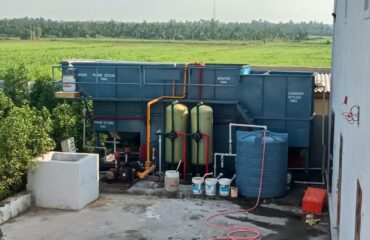
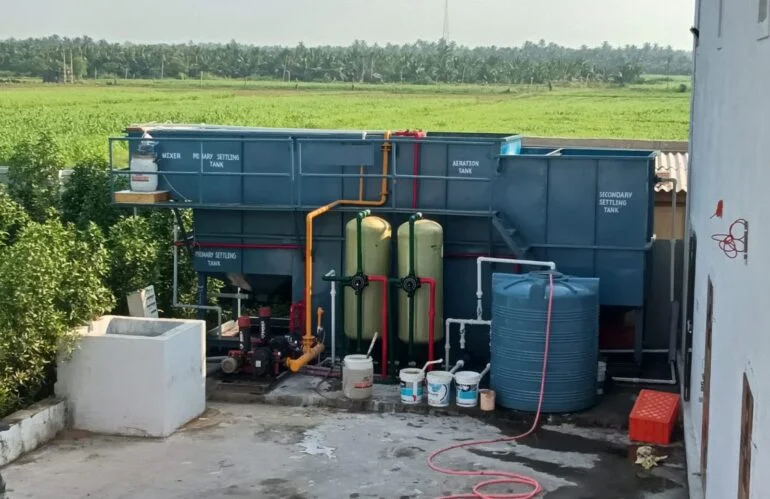
A Sewage Treatment Plant (STP) is a sophisticated engineering marvel designed to purify wastewater by removing physical, chemical, and biological contaminants. The goal is to produce an effluent that is environmentally safe for discharge or, ideally, for reuse. The comprehensive treatment process typically unfolds through several critical stages:
- Preliminary Treatment: This initial stage focuses on removing large, easily separable solids. It involves bar screens to filter out rags, plastics, and other debris, followed by grit chambers to settle heavier inorganic materials like sand and gravel. This step protects subsequent machinery from damage.
- Primary Treatment: Following preliminary treatment, wastewater flows into large sedimentation tanks (clarifiers). Here, heavier organic and inorganic suspended solids settle at the bottom to form primary sludge, while lighter materials float to the surface as scum. This physical separation significantly reduces the total suspended solids (TSS) and biochemical oxygen demand (BOD) of the wastewater.
- Secondary Treatment (Biological Treatment): This is the core stage where dissolved and colloidal organic matter is biologically degraded. Aeration tanks introduce air to promote the growth of aerobic microorganisms that consume the organic pollutants. Common secondary treatment technologies include:
- Activated Sludge Process: A widely used method where wastewater is aerated in a tank containing a suspension of microorganisms (activated sludge).
- MBBR (Moving Bed Biofilm Reactor): Utilizes small plastic carriers that provide a large surface area for biofilm growth, enhancing treatment efficiency in a compact footprint.
- SBR (Sequencing Batch Reactor): An advanced activated sludge process that operates in batches, allowing for flexible control over aeration, settling, and decanting phases, making it suitable for fluctuating flows.
- MBR (Membrane Bioreactor): Integrates a membrane filtration process with biological treatment, offering superior effluent quality, reduced footprint, and potential for direct water reuse.
Post-aeration, secondary clarifiers separate the treated water from the biological sludge.
- Tertiary Treatment (Advanced Treatment): This optional but increasingly vital stage further refines the effluent to meet stringent discharge standards or for specific reuse applications. It can include various processes:
- Filtration: Sand filters, activated carbon filters, or membrane filters remove residual suspended solids and some dissolved contaminants.
- Disinfection: Chlorine, ultraviolet (UV) radiation, or ozonation are used to eliminate remaining pathogens, making the water safe for discharge or reuse.
- Nutrient Removal: Specific processes are employed to remove nitrogen and phosphorus, which can cause eutrophication in receiving water bodies.
- Sludge Treatment and Disposal: The accumulated primary and secondary sludge is a byproduct that also requires treatment. This involves thickening, digestion (aerobic or anaerobic), dewatering (filter presses, centrifuges), and ultimately, safe disposal or beneficial reuse (e.g., as fertilizer or for energy generation).
Each stage is meticulously designed to contribute to the overall purification, underscoring the complexity and necessity of expert engineering provided by leading industrial water treatment specialists.
Selecting the Premier STP Plant Manufacturer in Dhanbad and Across India
The vast landscape of “STP plant manufacturers” and “STP plant manufacturer in India” necessitates a discerning approach when identifying the ideal partner for your project in Dhanbad. To sift through the options and pinpoint a reliable “Water Treatment Plant manufacturer in Dhanbad” or among the “Top 10 STP manufacturers in India,” consider the following crucial criteria:
H4.1. Depth of Experience and Robust Track Record
A leading “STP Plant manufacturer” should possess extensive experience in designing, engineering, installing, and maintaining diverse sewage treatment systems. Look for evidence of successful projects across various sectors—municipal, industrial (e.g., steel, power, food processing), commercial, and residential. A strong portfolio and client testimonials are indicative of their reliability and capability to handle complex challenges specific to Dhanbad’s environment.
H4.2. Commitment to Cutting-Edge Technology and Innovation
The field of wastewater treatment is constantly evolving. The best manufacturers invest in research and development, offering and implementing the latest technologies. Their ability to provide options like MBBR, SBR, MBR, and advanced tertiary treatments demonstrates their commitment to efficiency, reduced footprint, and superior effluent quality. Discuss their R&D efforts and how they integrate new innovations into their offerings.
H4.3. Tailored and Scalable Solutions
One size does not fit all in sewage treatment. An excellent “Sewage Treatment Plant” provider understands that each project in Dhanbad will have unique requirements—be it varying influent characteristics, fluctuating flow rates, specific land availability constraints, or stringent discharge norms. They should excel at custom-engineering solutions that are not only efficient for current needs but also scalable to accommodate future expansion or changes in wastewater profiles.
H4.4. Comprehensive After-Sales Service and Maintenance Support
The long-term performance and efficiency of an STP plant heavily rely on consistent operational support and maintenance. A truly reliable “STP Plant manufacturers” will offer robust after-sales services, including:
- Preventive and corrective maintenance programs.
- Availability of genuine spare parts.
- Remote monitoring and automation capabilities.
- Operator training and technical assistance.
- Prompt troubleshooting and emergency support.
This commitment ensures uninterrupted operation and extends the lifespan of your investment.
H4.5. Adherence to Regulatory Standards and Environmental Compliance
Ensuring that the treated effluent consistently meets or surpasses the standards set by environmental regulatory bodies (like CPCB and Jharkhand State Pollution Control Board) is non-negotiable. Reputable manufacturers integrate compliance into every stage of their design and build processes, providing systems that are robust enough to consistently meet discharge parameters, thereby protecting clients from legal repercussions and contributing positively to environmental stewardship.
H4.6. Cost-Effectiveness and Return on Investment (ROI)
While initial capital cost is a factor, focus on the total cost of ownership (TCO), which includes operational expenses (energy, chemicals, maintenance) and potential savings from water reuse. A high-quality, energy-efficient STP from a top manufacturer may have a higher upfront cost but often delivers a better ROI through lower operating costs and opportunities for water conservation.
The Myriad Benefits of Installing an STP Plant with an Esteemed Manufacturer
Partnering with a premier “Water Treatment Plant manufacturer in Dhanbad” goes beyond mere compliance, unlocking a spectrum of benefits:
- Environmental Protection: Drastically reduces water pollution, safeguarding local ecosystems and aquatic life.
- Public Health Improvement: Mitigates the spread of waterborne diseases by treating pathogens in sewage.
- Water Conservation & Reuse: High-quality treated water can be repurposed for non-potable uses (e.g., irrigation, industrial cooling, toilet flushing), significantly reducing reliance on fresh water sources and lowering water utility bills. This is crucial in water-stressed regions.
- Enhanced Corporate/Municipal Image: Demonstrates a strong commitment to environmental responsibility, fostering positive public relations and community trust.
- Economic Advantages: Avoidance of hefty fines for non-compliance, potential for carbon credits, and long-term operational savings from efficient plant design.
- Resource Recovery: Modern STPs can recover valuable resources, such as biogas (for energy generation) from sludge digestion and nutrient-rich biosolids.
The Journey to a Sustainable Dhanbad: Challenges and Forward-Thinking Solutions
While the benefits are clear, implementing STP projects in Dhanbad comes with its unique set of challenges, which leading manufacturers are equipped to address:
- Space Constraints: Urban areas in Dhanbad often have limited land available for large treatment facilities. Manufacturers mitigate this by offering compact, high-efficiency technologies like MBR and MBBR, which require smaller footprints.
- High Energy Consumption: Traditional STPs can be energy-intensive. Innovative manufacturers design energy-efficient plants, incorporating advanced aeration systems, gravity-fed designs where possible, and even exploring renewable energy sources for plant operation.
- Operating & Maintenance (O&M) Costs: The ongoing costs of chemicals, labor, and power can be substantial. Automated systems, robust equipment, and comprehensive training provided by manufacturers help minimize O&M expenses.
- Sludge Management: The proper disposal or reuse of sludge is critical. Manufacturers offer solutions for sludge dewatering, digestion, and provide guidance on beneficial reuse options.
- Fluctuating Flows & Load: Industrial and municipal wastewater flows can vary significantly. Advanced STP designs, particularly SBR systems, are adept at handling such fluctuations without compromising effluent quality.
The future of water treatment in Dhanbad points towards smart, integrated systems leveraging IoT (Internet of Things) for real-time monitoring and predictive maintenance, ensuring optimal performance and resource efficiency.
FAQs about Sewage Treatment Plants in Dhanbad
Here are some frequently asked questions regarding STP plants and manufacturers in Dhanbad:
- Q: Why is a Sewage Treatment Plant (STP) essential in Dhanbad?
A: STP plants are crucial in Dhanbad to treat domestic and industrial wastewater, preventing pollution of local water bodies, safeguarding public health, and complying with environmental regulations. They ensure the discharge of treated water that meets environmental standards, protecting the city’s future. - Q: What types of STP technologies are available from manufacturers in Dhanbad?
A: Manufacturers in Dhanbad offer a diverse range of STP technologies, including SBR (Sequencing Batch Reactor), MBR (Membrane Bioreactor), MBBR (Moving Bed Biofilm Reactor), and conventional activated sludge processes like Extended Aeration. The optimal choice is determined by specific project requirements, influent water quality, and desired effluent standards. - Q: How do I choose the right STP plant manufacturer in Dhanbad?
A: When selecting an STP plant manufacturer in Dhanbad, it’s vital to consider their extensive experience, proven track record, technological expertise in modern solutions, customization capabilities, robustness of after-sales service, strict compliance with regulatory standards, and overall cost-effectiveness, focusing on total cost of ownership. Requesting case studies and client testimonials provides valuable insights. - Q: What are the benefits of installing an STP plant for industries in Dhanbad?
A: For industries in Dhanbad, installing an STP plant offers profound benefits, including guaranteed compliance with environmental norms, significant reduction in fresh water consumption through treated water reuse, lower operational expenses, enhancement of corporate social responsibility (CSR) image, and avoidance of penalties for environmental non-compliance. - Q: Can STP plant manufacturers in Dhanbad provide custom solutions for specific needs?
A: Absolutely. Reputable STP plant manufacturers in Dhanbad specialize in providing custom-engineered solutions. They conduct thorough assessments of specific requirements such as influent characteristics, required treatment capacity, site-specific land availability, and budgetary constraints to design and implement tailored sewage treatment plants that ensure optimal performance, efficiency, and long-term sustainability.
Conclusion: A Cleaner, Greener Dhanbad Through Advanced Water Treatment
The journey towards a truly sustainable Dhanbad is intrinsically linked to effective and responsible wastewater management. Investing in a state-of-the-art Sewage Water Treatment Plant from a competent “Water Treatment Plant manufacturer in Dhanbad” is not merely an infrastructure upgrade; it is a profound commitment to environmental stewardship, public health, and the city’s long-term prosperity. By meticulously choosing the right “STP plant manufacturer,” industries, municipal bodies, and commercial establishments in Dhanbad can ensure they not only comply with regulations but also actively contribute to a cleaner, healthier, and more sustainable future for the entire region.