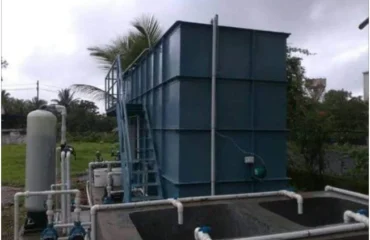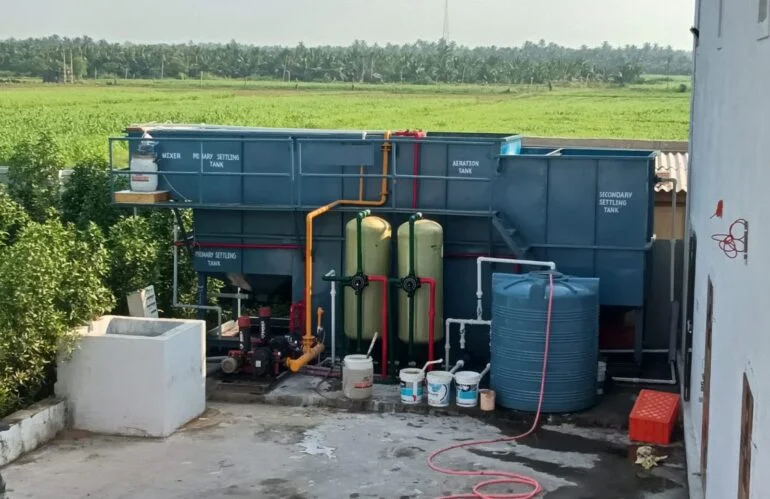
Dombivli, a vibrant and rapidly expanding city nestled within Maharashtra’s Thane district, stands at the crossroads of industrial growth and burgeoning residential development. This swift urbanization, while a sign of progress, brings with it a critical challenge: the efficient management of wastewater. The increasing volume of sewage generated by homes, businesses, and industries necessitates robust and sustainable treatment solutions. In this context, the role of a proficient Water Treatment Plant manufacturer in Dombivli transcends mere service provision; it becomes a cornerstone of environmental stewardship and public health. Investing in a state-of-the-art Sewage Treatment Plant (STP) is no longer a luxury but an indispensable step towards safeguarding our ecosystems and ensuring the well-being of the community.
The Imperative for Advanced Sewage Treatment in Dombivli’s Growth Story
As Dombivli continues its trajectory of development, the pressure on its natural resources, particularly water, intensifies. Untreated or inadequately treated sewage water can unleash a cascade of detrimental effects, including the contamination of local rivers and lakes, degradation of soil quality, and the spread of waterborne diseases. Recognizing these profound risks, both governmental bodies and private developers are increasingly prioritizing the establishment of sophisticated Sewage treatment plant facilities. These plants are meticulously engineered to purify domestic and industrial wastewater, systematically removing contaminants and rendering the water safe for environmental discharge or, ideally, for various reuse applications.
The selection of an appropriate STP plant manufacturer is a decision laden with significant long-term implications. It demands a thorough evaluation of their technological capabilities, track record, adherence to stringent environmental regulations, and their capacity to deliver bespoke solutions that cater to the unique topographical and demographic characteristics of the Dombivli region.
Demystifying the Operations of a Sewage Treatment Plant (STP)
A Sewage Treatment Plant (STP) is an intricate system designed for the purification of wastewater originating from diverse sources—be it residential communities, commercial hubs, or industrial complexes. The overarching objective is to strip the wastewater of its pollutants, including organic matter, suspended solids, and harmful microorganisms, before its release into the environment or its repurposing. The treatment process is typically orchestrated through a series of sequential stages:
- Preliminary Treatment: This initial stage focuses on the removal of larger, easily separable solids. Coarse screens intercept items like rags, plastics, and debris, preventing damage to downstream equipment. Grit chambers then allow heavier inorganic particles such as sand and gravel to settle out, protecting pumps and other mechanical components from abrasion.
- Primary Treatment: Following preliminary treatment, wastewater enters primary clarifiers or sedimentation tanks. Here, the flow velocity is significantly reduced, enabling suspended solids and some organic matter to settle under gravity. This forms primary sludge at the bottom, while lighter materials float to the surface as scum. Both are removed, reducing the organic load for subsequent stages.
- Secondary Treatment: This is the biological heart of the STP. Microorganisms are introduced and cultivated in aerated tanks (like Activated Sludge Process) or through media (like MBBR). These microbes actively consume the dissolved and colloidal organic pollutants, converting them into stable forms. This stage significantly reduces the Biochemical Oxygen Demand (BOD) and Chemical Oxygen Demand (COD) of the wastewater. Secondary clarifiers then separate the microbial biomass (activated sludge) from the treated water.
- Tertiary Treatment (Advanced Treatment): For higher-quality effluent or specific reuse applications, tertiary treatment becomes essential. This stage involves additional purification processes, which may include sand filtration to remove fine suspended solids, activated carbon adsorption to remove dissolved organic compounds, and nutrient removal processes (nitrogen and phosphorus). Disinfection, typically using chlorine, ultraviolet (UV) light, or ozone, is crucial at this stage to eliminate any remaining pathogens, ensuring the treated water meets stringent discharge or reuse standards.
For any entity, from a housing society to a large industrial estate, seeking reliable and efficient wastewater solutions, connecting with a reputable STP plant manufacturer in India with a strong operational footprint in regions like Dombivli is a strategic imperative.
Critical Benchmarks for Evaluating Water Treatment Plant Manufacturers in Dombivli
When the search for “STP Plant manufacturers near me” in the Dombivli vicinity begins, a structured evaluation framework is vital. The following critical factors should inform your decision-making process to ensure you forge a partnership with an industry leader:
1. Unwavering Technological Prowess and Commitment to Innovation
The landscape of wastewater treatment is dynamic, marked by continuous advancements. A premier Water Treatment Plant manufacturer in Dombivli must not only be abreast of these innovations but actively integrate them into their offerings. This includes leveraging cutting-edge technologies such as Membrane Bioreactors (MBR) for superior effluent quality, Sequential Batch Reactors (SBR) for operational flexibility, Moving Bed Biofilm Reactors (MBBR) for compact and efficient treatment, and anaerobic processes for energy recovery. Such advanced systems often translate to enhanced efficiency, reduced spatial requirements – a significant advantage in urban settings – and consistently higher treated water quality, all of which are crucial for densely populated and environmentally conscious areas.
2. Extensive Experience and a Robust Track Record
Experience is an invaluable asset in the complex realm of sewage treatment. Prioritize STP Plant manufacturers who boast a substantial portfolio of successfully designed, installed, and commissioned sewage treatment projects. Delve into their past performance by requesting detailed case studies, engaging with client testimonials, and following up on provided references. A company that has navigated and successfully executed diverse projects across various scales and wastewater types demonstrates an intrinsic understanding of the intricacies, potential pitfalls, and optimal solutions required for effective wastewater management.
3. Capacity for Customization and Future Scalability
The requirements of each sewage treatment project are inherently unique, influenced by factors such as influent characteristics, desired discharge standards, available land, and budgetary constraints. A “one-size-to-fit-all” approach is rarely effective. The chosen manufacturer must possess the engineering acumen to offer bespoke solutions that precisely align with your project’s specific demands. Furthermore, it is prudent to select a system designed with inherent scalability, allowing for cost-effective expansion or modification to accommodate future increases in wastewater generation, thereby future-proofing your investment.
4. Strict Adherence to Regulatory Compliance and Certifications
Environmental regulations in India, particularly those governing wastewater discharge, are stringent and subject to periodic revisions. A reputable STP plant manufacturer must demonstrate an intimate knowledge of and strict adherence to all pertinent local, state (e.g., Maharashtra Pollution Control Board – MPCB regulations), and national (e.g., Central Pollution Control Board – CPCB guidelines) environmental norms. Their treatment plants should be engineered to consistently achieve or surpass these discharge standards, thereby mitigating the risk of regulatory penalties, fostering corporate social responsibility, and ensuring genuine environmental protection.
5. Comprehensive After-Sales Service and Sustained Support
The successful installation of an STP plant marks merely the beginning of its operational lifecycle. The sustained efficiency and longevity of the system are heavily reliant on diligent maintenance and responsive technical support. It is imperative to inquire about the manufacturer’s post-installation services, which should ideally include:
- Annual Maintenance Contracts (AMCs): Structured agreements for routine inspections, preventive maintenance, and performance optimization.
- Ready Availability of Spare Parts: Ensuring quick access to critical components minimizes downtime during unforeseen breakdowns.
- Operator Training Programs: Empowering your on-site personnel with the knowledge and skills for effective daily operation and troubleshooting.
- Emergency Breakdown Support: A rapid response mechanism to address critical issues and restore plant functionality promptly.
Reliable and proactive after-sales support is pivotal for ensuring uninterrupted and efficient plant operation, thereby minimizing operational costs and maximizing the return on investment.
6. A Focus on Cost-Effectiveness and Enhanced Energy Efficiency
While the initial capital outlay for an STP plant is a significant consideration, a holistic evaluation must encompass the Total Cost of Ownership (TCO). This includes not only the upfront investment but also ongoing operational expenses such as energy consumption, chemical usage, and routine maintenance. A conscientious STP plant manufacturer will prioritize the design and implementation of energy-efficient systems that minimize power consumption and optimize chemical dosing, leading to substantial long-term savings and contributing to a greener operational footprint.
Diverse Sewage Treatment Technologies Offered by Leading Manufacturers
The foremost Top 10 STP manufacturers in India, including those with a strong focus on serving Dombivli, offer a diverse array of wastewater treatment technologies, each engineered to address specific project requirements:
- Activated Sludge Process (ASP): A venerable and widely adopted biological treatment method where microorganisms in an aerated tank consume organic matter. It’s known for its robust performance but can require a larger footprint.
- Moving Bed Biofilm Reactor (MBBR): This technology utilizes small plastic carriers (bio-chips) that provide a vast surface area for biofilm growth. MBBRs are highly efficient, compact, and resilient to shock loads, making them suitable for space-constrained urban environments.
- Sequential Batch Reactor (SBR): An intermittent, fill-and-draw type activated sludge system where all treatment phases (equalization, aeration, sedimentation, and decantation) occur in a single reactor. SBRs are highly flexible and ideal for treating variable flow rates and pollutant concentrations.
- Membrane Bioreactor (MBR): A cutting-edge technology that integrates biological treatment with membrane filtration. MBRs produce exceptionally high-quality effluent, often suitable for direct reuse, and offer a very small footprint compared to conventional systems. However, they typically involve higher capital and operational costs.
- Upflow Anaerobic Sludge Blanket (UASB): Primarily employed for treating high-strength industrial wastewater, UASB technology relies on anaerobic microorganisms to break down organic matter in the absence of oxygen. A significant byproduct is biogas, which can be harnessed for energy generation.
- Fluidized Aerated Reactor (FABR): Similar to MBBR, FABR systems use a carrier media to promote biofilm growth but maintain the media in a fluidized state, enhancing contact between wastewater and microbes. They offer high efficiency and a compact design.
The optimal choice of technology is a confluence of factors including the characteristics of the influent wastewater, the desired quality of the treated effluent, the availability of land, and the project’s budgetary parameters.
The Profound Societal and Environmental Impact of Robust Sewage Treatment Plants
The strategic deployment and efficient operation of Sewage treatment plant facilities yield a multitude of far-reaching benefits that extend beyond mere compliance:
- Environmental Conservation: By preventing the discharge of untreated wastewater, STPs play a crucial role in safeguarding rivers, lakes, wetlands, and groundwater from contamination. This preservation, in turn, protects aquatic biodiversity and maintains the ecological balance of natural water bodies.
- Protection of Public Health: Untreated sewage is a breeding ground for pathogenic microorganisms that cause waterborne diseases such as cholera, typhoid, and dysentery. STPs effectively eliminate these harmful pathogens, thereby significantly reducing the incidence of such diseases and enhancing the overall public health of communities.
- Promotion of Resource Recovery and Reuse: Advanced STPs are instrumental in producing high-quality treated wastewater that can be safely reused for various non-potable applications. This includes irrigation for agriculture and landscaping, industrial process water, toilet flushing, and groundwater recharge. This innovative approach to water management helps alleviate pressure on finite freshwater resources, especially in water-stressed regions.
- Ensuring Regulatory Compliance and Fostering Sustainability: For industries, municipalities, and housing complexes, operating a functional STP ensures strict adherence to environmental discharge standards, preventing costly penalties and legal repercussions. More broadly, it underpins a commitment to sustainable water management practices, aligning with national and global environmental goals.
- Tangible Economic Benefits: The economic advantages are multifaceted. Reduced reliance on fresh water for non-potable uses translates into lower operational costs for industries. Avoiding environmental fines contributes to financial stability. Furthermore, the development and operation of STPs stimulate local economies by creating jobs in engineering, construction, and maintenance sectors.
- Enhancing Community Image and Property Value: For residential developments and townships, the presence of an efficient and well-maintained STP can significantly enhance the community’s appeal and, consequently, property values, demonstrating a commitment to a clean and healthy living environment.
Partnering for a Sustainable Future: Water Treatment Plant Manufacturers in Dombivli
For individuals, co-operative housing societies, commercial establishments, and industrial enterprises within Dombivli, the quest for the ideal Water Treatment Plant manufacturer in Dombivli necessitates meticulous research and due diligence. Begin your search by exploring local options for “STP plant Manufacturers near me” and then systematically delve into their respective portfolios, evaluating their project diversity, technological expertise, and client feedback. The priority should be to identify manufacturers that offer an integrated and holistic approach – encompassing everything from initial site assessment and tailored system design to seamless installation, precise commissioning, and dependable long-term maintenance and operational support.
A truly reputable manufacturer transcends the role of a mere vendor; they evolve into a long-term strategic partner, dedicated to ensuring your STP plant operates with peak efficiency and reliability for its entire lifespan. They will serve as invaluable guides through the labyrinth of regulatory compliance, assist in optimizing operational expenditures, and empower you to make a tangible, positive contribution to environmental sustainability.
Conclusion: Charting a Course Towards a Greener and Healthier Dombivli
In the narrative of Dombivli’s ongoing development, the critical importance of effective sewage water treatment cannot be overemphasized. It is the bedrock upon which a healthy environment and thriving community are built. By conscientiously choosing and collaborating with a leading Water Treatment Plant manufacturer in Dombivli, local communities and diverse industries can collectively champion responsible wastewater management, vigorously safeguard public health, and diligently protect the precious local environment. Investing in advanced Sewage treatment plant technology is more than a financial outlay; it is a profound investment in a cleaner, healthier, and more vibrant future for Dombivli and its esteemed residents. Take the decisive step today to secure an efficient, reliable, and environmentally sound STP solution that not only meets your operational exigencies but also profoundly aligns with your commitment to ecological responsibility. Choose wisely, choose sustainably, and contribute to a legacy of environmental stewardship.